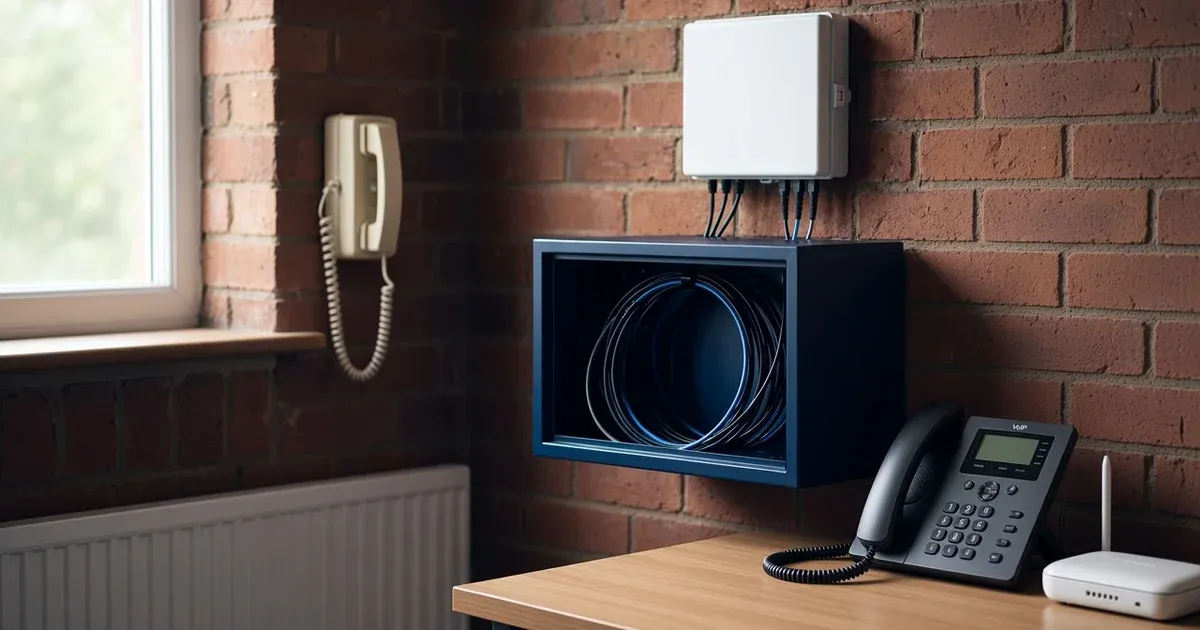
On 31 January 2027, the UK's traditional copper phone network, the PSTN (Public Switched Telephone Network), closes for good. Every analogue phone line and ISDN service has to move to a digital service before then. Openreach has said the deadline is fixed. The equipment is old, spares are running out, and the network can't keep running.
If your business still has a traditional line, there are about three months left to sort it. Here's what that means in plain English, and what to check now.
What is the PSTN switch-off?
The PSTN is the copper network that has carried landline calls for decades. The landline switch-off (also called the digital switchover) replaces it with digital phone lines that run over your broadband. In most cases, instead of plugging a phone into a wall socket, you'll make calls through your router or a cloud phone system.
According to Openreach, about 1.2 million lines were still on the old network in September 2026, including around 350,000 business premises. If yours is one of them, now is the time to act.
What stops working
It's not just the office phone. Anything that uses a traditional phone line could be affected, including:
- landlines and phone-only lines
- ISDN lines, which are often used by older office phone systems
- burglar alarms and fire alarm panels that dial out
- card payment terminals that use a phone line
- door entry systems and some CCTV
- lift emergency phones
- fax and franking machines
Some of these will work fine on a digital line, and some won't. The only way to know is to check.
What happens if you don't switch in time?
After 31 January 2027, lines that haven't moved may go onto Openreach's Emergency Voice and Access Continuity (EVAc) service. EVAc is a temporary, voice-only safety net, and it may not support the features you use today. It costs providers more than a normal digital line, and providers may pass that cost on. Openreach also warns it may not be able to move everyone onto EVAc, so some lines could lose service altogether. ISDN services that haven't moved will simply be switched off.
In short, waiting for the fallback isn't a plan.
Your switch-off checklist
Openreach suggests three steps: review, test and switch. Here's what that looks like for a small business.
- List every line. Go through your phone bill and your premises. Note every number, and what's plugged into each line, including the alarm, the card machine and the door entry.
- Ask your suppliers. Contact your alarm company, card machine provider and lift maintenance firm, and ask whether their equipment works on a digital line. If not, ask what the upgrade is and when they can do it.
- Check your broadband. Digital calls run over your internet connection, so it needs to be reliable. If calls matter to your business, think about a backup connection too.
- Check your contracts. Look at when your current phone and broadband contracts end, so you don't pay twice or get stuck on an old deal.
- Test before the deadline. Openreach runs free test labs where equipment can be checked for compatibility. Ask your provider about testing.
- Switch, then check again. After you move, test every device, including a test alarm signal and a test card payment.
Your options
Most small businesses will move to one of these:
- Business VoIP or a cloud phone system. Your calls run over the internet, and staff can answer the office number on a desk phone, a laptop or a mobile.
- Microsoft Teams calling. If you already use Microsoft 365, your phone system can live inside Teams.
- Digital lines for alarms and other equipment. Some alarm and lift lines move to dedicated digital or mobile-based connections.
The right choice depends on how many people take calls, how you work and what's plugged into your lines. Our business VoIP service covers businesses in Dorset and across the UK, and we can set up the switch for you.
Common mistakes to avoid
- Leaving it to the last month. Business switches take longer than home ones because there's more equipment involved.
- Forgetting the alarm line. It's the one most often missed, and the one you most need working.
- Assuming your number will change. In most cases you can keep your existing number when you move to a digital service. Check with your provider before you switch.
- Ignoring letters from your provider. If they've been in touch about switching, reply. They're trying to move you before the deadline.
Frequently asked questions
When is the PSTN switch-off?
The traditional phone network closes on 31 January 2027. Every line has to move to a digital service before then.
Will my phone number change?
Usually not. In most cases you can keep your number when you move to a digital service, but confirm this with your provider before you switch.
Will my burglar alarm still work?
It depends on the alarm. Some work on a digital line, and others need an upgrade or a different type of connection. Ask your alarm company now.
Do I need new phones?
Not always. Some existing handsets work with an adapter, but older office phone systems, especially ISDN ones, often need replacing. A cloud phone system can mean no on-site phone system at all.
Not sure what's on your lines?
Book a free IT review and we'll review your phones, broadband and connected equipment remotely as part of it. You'll get a plain-English report showing what needs to move before January 2027. You can also call us on 01305 310006.