

Relying on old-school, in-house IT is a bit like running your own power station just to keep the lights on. It’s a huge distraction, costs a fortune to maintain, and ties up money that could be better spent elsewhere. The benefits of cloud computing for business offer a much smarter way forward, helping you cut costs, become more flexible, and seriously upgrade your security without the massive upfront price tag.
Why Every Business Should Consider The Cloud

For small and medium-sized businesses (SMBs), the cloud isn't just a nice-to-have; it’s a genuine game-changer. It completely levels the playing field, giving you access to the kind of powerful tech that, until recently, only the big corporations could afford.
Think of it this way: instead of buying, housing, and maintaining your own bulky servers, you're essentially renting computing power and storage from a major provider like Amazon Web Services (AWS) or Microsoft Azure.
This simple change flips your IT spending on its head. It shifts your costs from a huge, one-off capital expenditure (CapEx) to a manageable, predictable operational expenditure (OpEx). You stop pouring cash into hardware that's destined to become obsolete and instead pay a simple monthly fee for exactly what your business needs, right now.
The Core Advantages For Smbs
This new model brings practical, immediate benefits that you'll feel in your day-to-day operations and see on your balance sheet. The biggest wins for most businesses include:
- Cost Efficiency: No more guessing and overspending on hardware you might not even use. With a pay-as-you-go model, you only pay for the resources you actually consume—just like your electricity bill.
- Greater Flexibility: Business needs are never static. The cloud lets you scale your resources up or down almost instantly, so you can easily handle a seasonal rush or a sudden growth spurt without missing a beat.
- Enhanced Security: Let's be honest, major cloud providers invest billions in security. They offer a level of protection with teams of experts that most SMBs could never hope to build on their own.
To get a deeper look into how this works in practice, you can explore these cloud computing benefits like cost savings, speed, and agility.
When you move to the cloud, you're doing more than just a tech upgrade. You're fundamentally redesigning your business to be more agile, resilient, and competitive. It’s about letting you focus on what you do best—running your business—while the experts handle the complex infrastructure behind the scenes.
Ultimately, this transition isn't just about saving a bit of cash. It's a strategic move that makes your entire operation more efficient and ready for the future. Partnering with the right team to implement a business IT solution is key to making sure the migration is seamless and perfectly aligned with your long-term goals.
Transform Your Finances with a Smarter Cost Model

One of the most powerful reasons businesses move to the cloud is the way it completely changes the financial conversation around IT. Think of it like this: would you rather buy an entire fleet of delivery vans, or simply pay a courier service whenever you need to send a parcel? That’s the core of the financial shift the cloud delivers.
For years, traditional IT meant huge upfront investments in physical hardware. This is known as Capital Expenditure (CapEx), and it involved sinking thousands of pounds into servers, storage, and networking gear that started losing value the moment you switched it on.
The cloud turns that old model on its head. It moves your IT spending to an Operational Expenditure (OpEx) model. Suddenly, your IT costs look a lot more like a predictable monthly utility bill. You’re no longer buying expensive assets; you’re paying a subscription for the services you actually use.
Say Goodbye to Large Upfront Investments
With old-school, on-premise IT, trying to predict your future needs was a massive gamble. You might overspend on a powerful server hoping for growth, only to have it sit there, underused and gathering dust. That’s cash you could have put into marketing, product development, or hiring key staff.
Cloud computing makes that entire problem disappear. There are no servers to buy, no data centres to build, and no costly software licences to purchase upfront. You can access top-tier technology with a minimal initial outlay, freeing up precious capital to fuel your business’s growth.
Slash Ongoing Maintenance and Hidden Costs
The price tag on a server is just the tip of the iceberg. On-premise infrastructure comes with a long list of ongoing and often hidden expenses that can quickly get out of hand.
You have to factor in costs like:
- Power and Cooling: Servers are power-hungry and need constant cooling to stop them from overheating, which sends your electricity bills soaring.
- Physical Space: You need a secure, dedicated server room – a luxury most small businesses can’t afford.
- IT Staff: You need skilled people on your payroll to install, patch, maintain, and eventually replace all that hardware.
- Repairs and Upgrades: When something breaks, the cost of replacing it—and the downtime involved—is all on you.
This table breaks down how the cost responsibilities change when you move from an on-premise setup to the cloud.
On-Premise IT vs Cloud Computing: A Cost Comparison
| Cost Factor | On-Premise Infrastructure (CapEx Heavy) | Cloud Computing (OpEx Model) |
|---|---|---|
| Initial Purchase | High upfront cost for servers, storage, software licences. | No hardware costs. Minimal to zero setup fees. |
| Maintenance | Ongoing costs for repairs, parts, and upgrades. | Included in the subscription fee. Provider handles all maintenance. |
| Staffing | Requires dedicated IT staff for hardware management. | Significantly reduced need for in-house hardware experts. |
| Energy & Space | You pay for electricity, cooling, and physical server room space. | Covered by the cloud provider. |
| Scalability Costs | Expensive and disruptive to add new hardware. | Scale up or down instantly, paying only for what you use. |
As you can see, the cloud model simplifies your budget by bundling these unpredictable costs into one straightforward monthly fee.
By moving to the cloud, you essentially hand over all these headaches to the provider. Your subscription covers everything—maintenance, security, and hardware refreshes—turning a chaotic mess of expenses into a single, predictable operational cost.
This shift is making a huge economic impact. In 2024, the UK cloud computing market hit an estimated value of around £22 billion. It’s a clear sign that UK businesses are ditching capital-heavy infrastructure for more agile, pay-as-you-go cloud services. You can discover more about UK cloud market trends to see just how big this change is.
This approach gives you a much clearer picture of what your technology is actually costing you. For a deeper dive into how this works in practice, our guide on cloud storage vs local storage is a great next step. The cloud doesn't just simplify your budget; it gives you a much clearer return on your investment.
Grow Your Business Without Your Tech Holding You Back

If you've ever felt like your own IT setup was slowing you down, you're not alone. Traditional, on-site hardware is incredibly rigid. For a growing business, that rigidity can feel like trying to run a marathon in concrete shoes—every step forward is a real struggle. Cloud computing completely flips that script, turning your technology from a bottleneck into your biggest growth driver.
Let's take a real-world example. Imagine you run an online shop and Black Friday is just around the corner. With your own servers, you'd have to buy, set up, and configure more hardware weeks in advance, essentially guessing how much capacity you’ll need. After the sales rush is over, that expensive kit just sits there, underused and depreciating.
The cloud offers a far more elegant solution. It gives you elasticity—the power to automatically add or remove computing resources as you need them. Your website can handle a massive flood of customers one day, then scale right back down the next. The best part? You only pay for the extra horsepower when you actually use it.
Scaling Up or Scaling Out, Whenever You Need To
This incredible flexibility comes in two main flavours, each useful for different situations. Getting your head around them shows just how adaptable the cloud can be.
- Vertical Scaling (Scaling Up): Think of this as giving your current server a shot of adrenaline. You can instantly boost its CPU, RAM, or processing power to handle a more demanding job, like crunching the numbers for a complex report.
- Horizontal Scaling (Scaling Out): This is about adding more hands to the deck. Instead of making one server more powerful, you add more machines to share the load. It's the perfect way to manage a sudden surge in website traffic.
The cloud makes both types of scaling almost effortless. You can set up simple rules that trigger these changes automatically. For example, if your CPU usage climbs to 80%, the system can spin up more resources on its own until things quieten down, ensuring your customers never notice a thing. No late-night calls, no manual fixes.
Seize Opportunities Without Missing a Beat
This kind of agility is a game-changer for any business trying to stay ahead. It means you can react instantly to market changes and jump on growth opportunities that would be impossible with a fixed, physical setup.
Say a marketing campaign unexpectedly goes viral. Instead of your systems crashing under the pressure, the cloud infrastructure simply expands to handle the new demand. You get to capitalise on your success without any of the technical headaches.
The real power of cloud scalability is that it aligns your technology capabilities directly with your business ambitions. You are no longer limited by your hardware; you are empowered by it.
This flexibility also lets you experiment and innovate with very little risk. You can launch a new service, test a new app, or even dip your toes into a new market without the massive upfront cost of buying new servers. If an idea doesn't pan out, you just turn off the resources and stop paying for them. It’s that simple.
It's this operational agility that builds truly resilient modern businesses. In fact, a recent survey found that 62% of IT leaders see flexibility and scalability as the main reasons for moving to the cloud. Many are even looking at more advanced setups, and you can explore the key differences between multi-cloud vs hybrid cloud approaches in our guide. At the end of the day, the cloud gives you the freedom to grow on your own terms.
Enhance Your Security and Simplify Compliance
For many business owners, the idea of moving sensitive data off-site feels like a huge security risk. It’s a common worry, but it's one of the biggest myths about the cloud. The truth is, for most small and medium-sized businesses (SMBs), moving to a major cloud provider is a massive security upgrade.
Think of your on-site server room like a small office safe. It feels secure because it's right there, but it’s still exposed to physical theft, local disasters, and cyberattacks that can easily get past basic defences.
Now, contrast that with using a major cloud provider like AWS, Azure, or Google Cloud. That’s like moving your most valuable assets into a high-security bank vault. These giants invest billions of pounds every year in security, with elite teams of experts working around the clock to protect their infrastructure. It’s a level of protection most individual businesses could never afford on their own.
Enterprise-Grade Protection for Every Business
One of the best things about cloud security is that it shifts your approach from being reactive to proactive. Instead of just responding to problems, you get robust, multi-layered security built right into the platform, taking a huge weight off your shoulders.
This advanced protection gives you things like:
- Automated Security Patching: Providers constantly apply security updates to their infrastructure, shutting down vulnerabilities before criminals can find them.
- Advanced Threat Detection: Sophisticated AI systems are always on the lookout for suspicious activity, identifying and stopping threats as they happen.
- Physical Security: Their data centres are Fort Knox-level secure, with biometric scanners, 24/7 surveillance, and backup power systems.
When you move to the cloud, you're essentially hiring a world-class security team. Of course, to make the most of it, you still need to configure things correctly. You can learn more in our guide on cloud security best practices.
Simplify Your Compliance Journey
Trying to meet regulations like GDPR can be a real headache. It demands strict data governance and access controls, which are tough to manage with on-premise systems.
Cloud platforms, on the other hand, are designed to make this much easier. They come with built-in tools and certified frameworks that take the pain out of managing data and privacy.
With the cloud, you can define exactly where your data is stored, who can access it, and how it’s managed. This makes proving you're compliant with regulations like GDPR far more straightforward.
This is a major reason for the cloud's explosive growth in the UK, where keeping data local is often a top priority. Government frameworks like G-Cloud now demand certified security and local data handling. In fact, the UK's public cloud market is expected to hit around £28.4 billion (US$35.8bn) by 2025. Discover more insights about UK public cloud growth on Statista.com.
To tighten your security even further and meet compliance deadlines without the stress, it's smart to use the right cloud security assessment tools. They help you spot potential weaknesses and ensure your setup meets all the required standards, giving you the peace of mind to focus on running your business.
Boost Productivity and Foster Seamless Collaboration

Beyond the cost savings and technical flexibility, one of the biggest gains from cloud computing is how it completely changes the way your team works. It knocks down the old walls—both physical and departmental—that used to get in the way, paving the way for a much more connected and productive workforce.
Remember the old way of doing things? A marketing manager drafts a proposal, saves it as 'Proposal_v3_Final_Final.docx', and emails it out. Before you know it, you have a dozen versions floating around, creating a mess of confusion and wasted time.
Cloud-based tools get rid of that chaos. They establish a single source of truth—a central, live document or project space that everyone can access and update at the same time.
Empowering Your Team to Work from Anywhere
Let's be honest, the recent shift to remote and hybrid working simply wouldn't have been possible without the cloud. When you give your team secure access to the files and applications they need from any device—a laptop at home, a tablet on the train, or a phone between meetings—you stop tying productivity to a specific desk.
This is more than just a convenience; it's about building a resilient, modern business. When your team can work together effectively no matter where they are, you can hire the best people, not just the closest. It also means your business can keep running smoothly, even when unexpected disruptions happen.
Think about a project manager updating a timeline from their home office. The team out in the field sees those changes instantly on their mobiles. This kind of real-time sync means everyone is on the same page, which cuts down on mistakes and helps everyone make faster, better decisions.
Real-Time Collaboration in Action
The practical benefits of cloud collaboration are all around us, and they've completely reshaped how we get things done. This isn't a future trend; it's the standard way of working now.
Market analysis in 2025 revealed that a staggering 93% of UK companies have adopted cloud-based collaboration tools. Why? Because they lead to faster project turnarounds and drastically reduce the endless back-and-forth of internal emails. If you're interested, you can read more about these cloud adoption statistics and see the real-world impact for yourself.
Here’s how this looks day-to-day:
- Co-editing Documents: Multiple team members can jump into the same spreadsheet, presentation, or report simultaneously. You see their changes as they happen, and you can have conversations right there in the comments.
- Centralised Project Management: Cloud-based platforms like Asana or Trello give the whole team a bird's-eye view of a project. You can assign tasks, set deadlines, and attach files, keeping everyone perfectly aligned.
- Unified Communication: Modern communication tools bring chat, video calls, and file sharing together in one place. This stops important conversations from getting lost in different apps and creates a searchable record of what was decided.
By taking the friction out of teamwork, the cloud doesn’t just speed up your existing workflows—it unlocks entirely new ways of getting work done. It helps build a culture where information is shared openly, which is essential for any growing business.
At the end of the day, by creating a more connected and efficient workforce, cloud computing helps you get better results, faster. It’s a smart move that pays back in higher productivity, happier employees, and a healthier bottom line.
Strengthen Business Continuity with Cloud Disaster Recovery
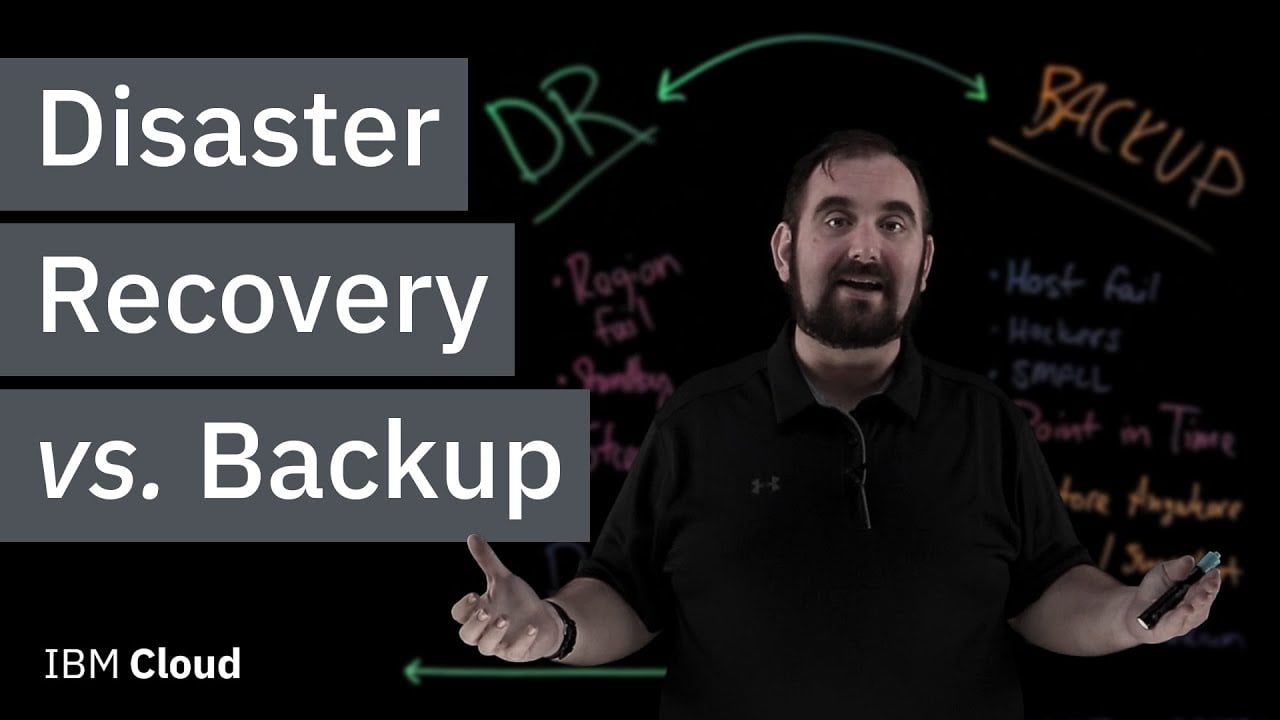
What would happen if your office was hit by a flood, a fire, or a crippling cyberattack tomorrow? If you’re relying on old-school, on-site IT, it’s a terrifying thought. It could easily mean weeks of downtime, permanent data loss, and for many businesses, the end of the road.
This is where one of the most powerful benefits of cloud computing for business really shines.
Depending on local backups—like an external hard drive in a cupboard—is a bit like hiding your spare house key under the doormat. It feels secure, but it’s right next to the problem. If disaster strikes your building, your backup is probably gone too.
Cloud-based disaster recovery gives you a proper safety net. Think of it as a secure, constantly updated digital copy of your entire business, stored in a completely separate and safe location, miles away from your physical office.
From Risky Manual Backups to Automated Resilience
Not so long ago, disaster recovery was complex and incredibly expensive. It often involved shipping physical backup tapes to a secure facility—a slow, manual process that was far too costly for most small businesses.
The cloud has completely changed the game. It automates the whole thing, making top-tier business continuity affordable and accessible for everyone.
- Automated Data Backups: Your crucial business data gets backed up to the cloud automatically and often, with no need for someone to remember to do it. This takes human error out of the equation.
- Geographic Redundancy: Cloud providers copy your data across multiple data centres in different locations. So, if a major outage hits one region, your data is still safe and sound somewhere else.
- Rapid Recovery: Because your systems are mirrored in the cloud, you can get back on your feet in a fraction of the time. Instead of waiting days or weeks to replace servers, you can restore everything in hours, sometimes even minutes.
Minimising Downtime and Data Loss
Downtime isn't just an inconvenience; it’s a direct hit to your bottom line. Every hour your systems are down means lost sales, unhappy customers, and a dent in your reputation. Cloud disaster recovery is built to shrink both your Recovery Time Objective (RTO)—how fast you need to get back online—and your Recovery Point Objective (RPO)—how much data you can tolerate losing.
With cloud-based recovery, businesses can cut their recovery time from days down to just a couple of hours. In fact, research shows that companies using the cloud can fix disaster-related problems nearly four times faster than those that don't.
This speed is what separates a minor hiccup from a business-ending catastrophe. It ensures that if the worst does happen, you can restore your operations with minimal data loss and get back to serving your customers. This makes cloud disaster recovery a non-negotiable part of modern business resilience, protecting everything you've worked so hard to build.
Your Cloud Computing Questions Answered
It’s completely normal to have questions when you start looking at the cloud. Moving past the buzzwords and getting into the practical side of things is what helps you decide if it’s the right move for your business. Let's tackle a few of the most common queries we hear.
Is the Cloud Genuinely Secure for My Business Data?
This is, without a doubt, the number one question on most people's minds. The truth is, major cloud providers like Microsoft and Amazon operate with a level of security that’s practically unattainable for most small to medium-sized businesses.
Think about it: their entire reputation and business model hinge on protecting your data. They invest billions in fortifying their data centres, employ world-class cybersecurity experts, and roll out security patches automatically. In almost every case, your data is far safer in their hands than on a server tucked away in your office cupboard.
What Does the Migration Process Look Like?
"How disruptive will it be to move everything over?" That’s another big one. The process can be straightforward or more involved, but it all comes down to your current setup and what you're aiming to do.
You don't have to do a "big bang" migration. A phased approach is almost always the smartest way forward. You could start small by moving your email or file sharing to the cloud first.
This lets you see the benefits quickly and get comfortable with the new environment. A typical migration usually follows these steps:
- Assessment and Planning: A good IT partner will start by understanding your existing systems and what you want to achieve, creating a clear roadmap.
- Pilot Migration: We'll move a single, non-critical application first. This is a low-risk way to test the waters and work out any kinks.
- Phased Rollout: Following the plan, we methodically move the rest of your systems over, timing it carefully to minimise any disruption to your day-to-day work.
- Optimisation: Once you’re operating in the cloud, we shift focus to fine-tuning everything to ensure you're getting the best performance without overspending.
How Much Control Will I Actually Have?
"Will I lose control over my IT?" It’s a fair question, but the cloud actually gives you a different, more strategic kind of control. Yes, you hand over the management of the physical hardware, but you gain incredibly powerful tools to manage everything else.
Cloud platforms offer detailed dashboards that give you a transparent, real-time view of your resource usage, costs, and system performance. This kind of insight helps you make much smarter, data-driven decisions.
You can adjust user permissions, monitor security alerts, and add or remove resources with a few clicks. It frees your team from the headache of maintaining physical kit, letting them focus on projects that actually grow the business. You’re essentially swapping the hassle of hardware maintenance for the power of strategic management.
Ready to see how the cloud could work specifically for your business? The team at HGC IT Solutions provides expert guidance and managed IT services to make your move to the cloud a smooth and successful one. Contact us today to start the conversation.
